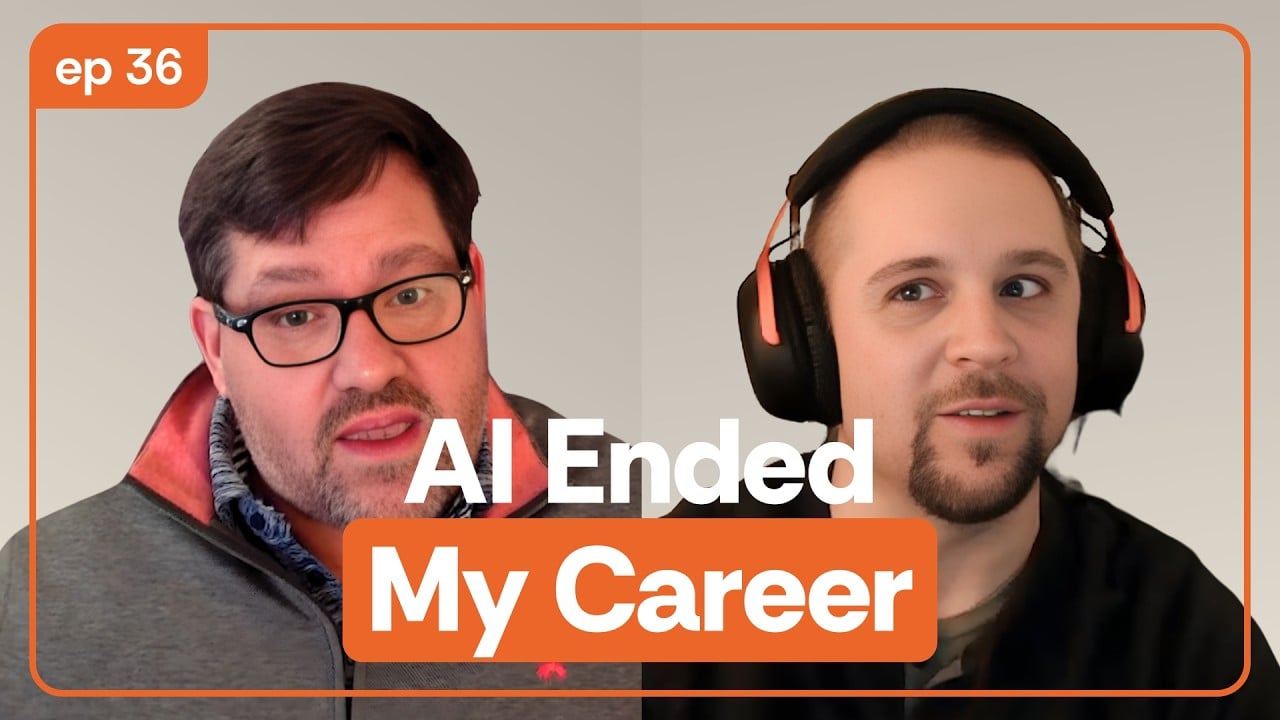
How AI Agents Transformed a 50-Year-Old's Career
A 50-year-old liberal arts professional rebuilt his career by mastering AI agents after watching his $200/hour expertise become commoditized overnight.
The Reality Check That Changed Everything
When niche expertise becomes commoditized overnight, professionals face a critical choice: adapt or become irrelevant. Tom Elliott's story illustrates how AI agents can reshape careers, even for those who never considered themselves "tech people."
After building a development company over a decade, Tom watched his specialized skills—once worth $200 per hour—lose their market value as AI democratized technical capabilities. At 50, without a coding background, he faced an existential crisis that would ultimately lead to mastering AI agent development.
From Fear to AI Mastery
"I am screwed. I'm 50 years old. I'm a liberal arts guy. I can't code," Tom admitted. This vulnerability became his strength. When survival is at stake, learning accelerates exponentially.
Instead of retreating, Tom dove headfirst into AI experimentation. He discovered that technical expertise wasn't the barrier he imagined—effective communication with AI systems was the real skill that mattered.
The Power of Strategic Prompting
Tom's breakthrough came from understanding that asking the right questions trumps technical knowledge. "If you have the right questions to ask, if you know how to prompt, if you know how to tell the thing what you want in the first place, you go from being underskilled, to the master of the universe."
His approach centered on meta-prompting—asking AI systems how they prefer to be prompted. This simple strategy became the foundation for building sophisticated AI agents.
Building Real Solutions with AI Agents
Theory transformed into practice when Tom developed "Molly," a voice AI agent for his new venture, Rescue Health. This agent handles customer interactions autonomously, demonstrating how AI can streamline operations while enhancing user experience.
The project showcased several key principles:
- Voice interfaces make AI more accessible to users
- AI agents excel at handling routine customer interactions
- Proper prompting strategies enable non-technical founders to build functional systems
- Curiosity and experimentation beat formal training
Lessons for Career Transformation
Tom's journey reveals that AI agent development isn't reserved for computer science graduates. Liberal arts backgrounds can be advantageous—understanding human communication translates directly to effective AI interaction.
Essential Strategies for AI Adoption
Success with AI agents requires:
- Embrace urgency: Existential pressure accelerates learning
- Focus on communication: Prompting skills matter more than coding ability
- Experiment relentlessly: Hands-on experience beats theoretical knowledge
- Ask better questions: Meta-prompting unlocks AI potential
- Build real projects: Applied learning creates genuine expertise
The Future of Expertise
Tom's transformation illustrates a broader shift in how we define professional expertise. Traditional skills may become commoditized, but the ability to effectively collaborate with AI systems represents a new form of valuable knowledge.
For professionals facing similar disruption, Tom's story offers hope: age, background, and technical experience matter less than curiosity, communication skills, and willingness to experiment with AI agents.